Aldeburgh Golf Club intertidal estuary defences
Holmes Plant & Construction were called upon to assist with installing an important new estuary tidal defence system.
When a golf course was becoming flooded because estuary defences were no longer able to hold back the spring tides, Holmes Plant & Construction were called upon to assist with installing an important new estuary tidal defence system.
Aldeburgh Golf Club, founded in 1884, is England’s second oldest maritime heathland course. With a beautiful backdrop overlooking a sweeping stretch of the River Alde in Suffolk, the River Course consists of nine holes and has wonderful views across the marshes. The downside of being in this beautiful setting, is that the course is subject to tidal surges which have been breaching the river banks.
After a major breach in 2013, when 120 hectares of freshwater grazing marsh and the golf course were flooded during each spring tide, a new defence was built along a shorter retreated line.
However, as a result of settlement over the following 8 years, the new defences had dropped by over 0.5 metres and overtopping was becoming a frequent occurrence on spring tides, which occur twice a month, resulting in parts of the course becoming unplayable.
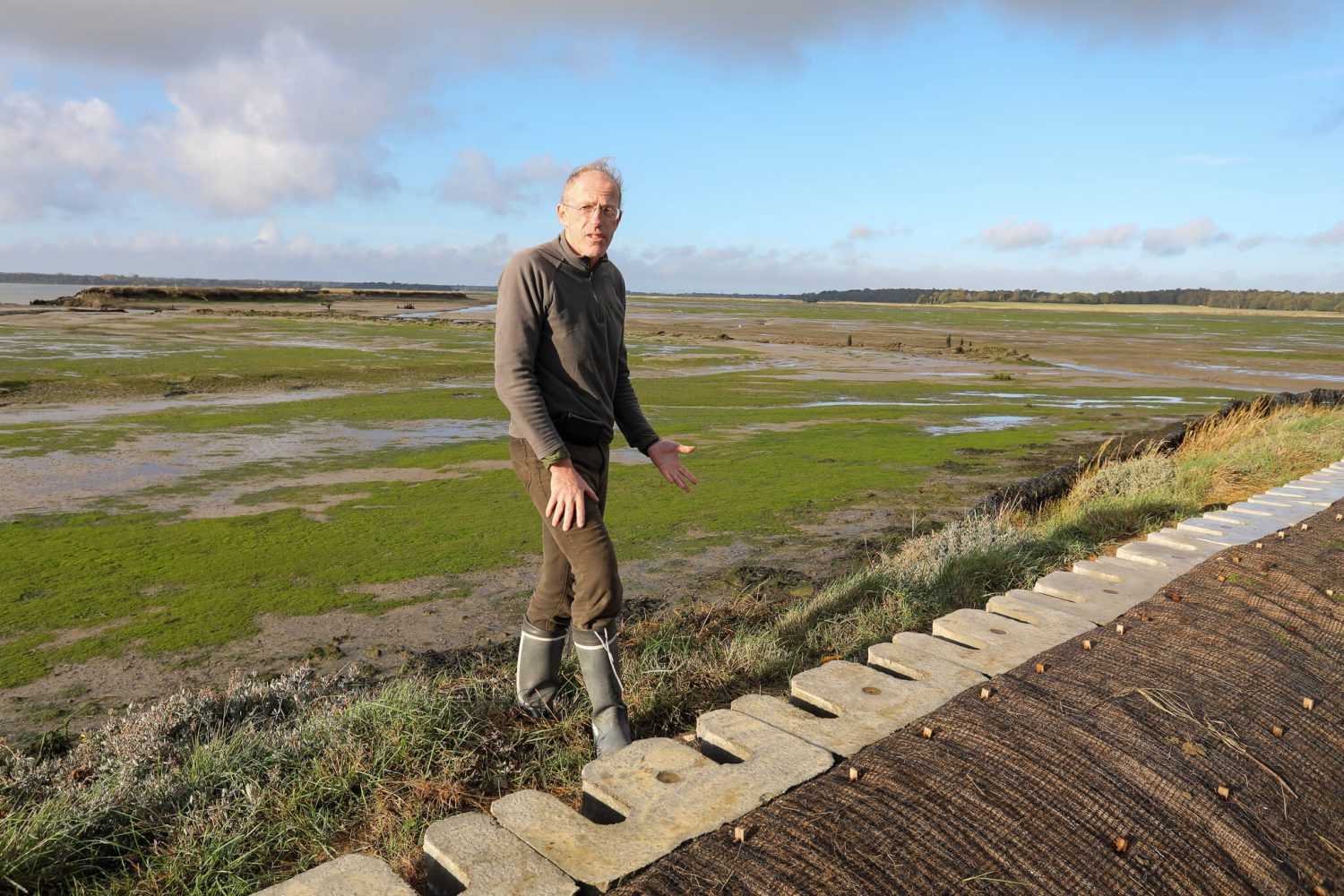
Holmes Plant & Construction carried out all the groundworks on a new intertidal estuary defence system. Rather than raising the earth bank further, Aquacast blocks from Poundfield Precast were laid on top of the existing bank, and were used to anchor down a high performance turf reinforcement mat which would allow grass to grow through it and help to stabilise the bank. This solution was chosen to minimise the weight impact of the new defence as much as possible and reduce the risk of further settlement which could eventually lead to the sinking of the defence walls. In total, 660 of the U-shaped blocks were laid, which dissipate wave energy during a tidal surge, as well as encourage the development of biodiversity through establishing natural habitats.
Due to the conditions of the site, heavy machinery would have caused significant damage to the surrounding area and therefore we brought in smaller, more lightweight equipment to reduce damage to the soil and to protect the natural habitat as much as possible.